
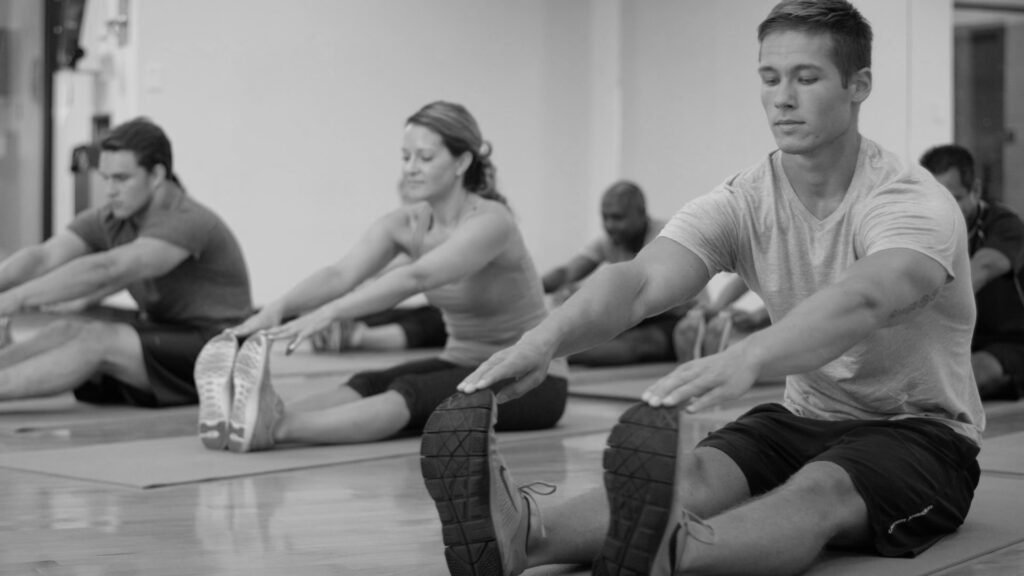
THE SIT AND REACH TEST: WHAT YOUR SCORE MEANS & HOW TO IMPROVE IT
THE SIT AND REACH TEST: WHAT YOUR SCORE MEANS & HOW TO IMPROVE IT
The sit and reach test (sometimes written as the sit-and-reach test) is one of the most widely used flexibility assessments in fitness. You’ve probably seen it in school PE classes or during a gym assessment: sit down, legs straight, reach forward, and measure how far past your toes you go.
Simple? Yes.
Misunderstood? Very.
For training clients, the sit and reach test isn’t about bragging rights — it’s about identifying mobility restrictions that affect squats, dead lifts, posture, and long-term joint health.
Let’s break down what your score actually means — and how to improve it safely.
WHAT IS THE SIT AND REACH TEST?
The sit and reach test measures flexibility of the:
-
Hamstrings
-
Lower back
-
Posterior chain tissue tolerance
You sit with legs straight, feet against a box, and reach forward as far as possible while keeping knees extended.
The distance reached (positive or negative) becomes your score.
It’s commonly used in:
-
Schools
-
Athletic testing
-
General fitness assessments
-
Personal training evaluations
WHAT IS A GOOD SIT AND REACH TEST SCORE?
Scores vary by age and sex, but generally:
-
Above toes (positive score): Above average flexibility
-
At toes (zero): Average
-
Cannot reach toes (negative): Below average
For most adult training clients:
-
Reaching 2–5 cm past toes = solid general flexibility
-
8+ cm past toes = very good
-
Unable to reach toes = likely hamstring restriction
However…
⚠️ A high score does NOT automatically mean you move well under load.
⚠️ A low score does NOT automatically mean you’re dysfunctional.
It’s one data point — not a diagnosis.
WHY THE SIT AND REACH TEST MATTERS FOR CLIENTS
1️⃣ It Affects Squat and Deadlift Mechanics
Limited hamstring flexibility can:
-
Pull the pelvis into posterior tilt
-
Limit hip hinge depth
-
Increase lower back rounding under load
Improving flexibility often improves lifting mechanics.
2️⃣ It Impacts Posture
Chronically tight hamstrings can:
-
Contribute to lower back tension
-
Restrict pelvic movement
-
Affect standing posture
3️⃣ It May Influence Injury Risk
Tight tissue alone doesn’t cause injuries — but reduced flexibility combined with load and poor control increases strain risk.
WHAT THE SIT AND REACH TEST DOES NOT MEASURE
The test does NOT measure:
-
Hip joint internal rotation
-
Core stability
-
Asymmetries
-
Neural tension vs muscular tightness
-
Ankle mobility
So if someone scores poorly, don’t just prescribe static hamstring stretching and call it a day.
COMMON REASONS CLIENTS SCORE LOW
-
High-volume lifting without mobility work
-
Long hours sitting
-
Previous hamstring strains
-
Fear of stretching discomfort
Often it’s simply underexposure to end-range movement.
HOW TO IMPROVE YOUR SIT AND REACH TEST SCORE
Step 1: Warm Up Dynamically (Before Training)
-
Leg swings
-
Walking toe touches
-
Hip hinge pattern drills
Dynamic work improves short-term range of motion without reducing strength output.
Step 2: Strengthen Through Range
Loaded Romanian deadlifts (RDLs)
Slow eccentric hip hinges
Tempo kettlebell deadlifts
Strength + stretch together improves long-term mobility better than passive stretching alone.
Step 3: Static Stretch After Training
Post-workout hamstring stretches:
-
30–45 seconds
-
2–3 rounds
-
3–5 times per week
Consistency > intensity.
Step 4: Re-Test Every 4–6 Weeks
Mobility improves gradually.
Track progress like you would strength.
HOW LONG DOES IT TAKE TO IMPROVE?
Most clients see noticeable improvement within:
-
2–3 weeks (if previously inactive)
-
4–6 weeks (if moderately trained)
-
8+ weeks (if long-term stiffness)
Consistency is the biggest factor.
WHEN THE SIT AND REACH TEST ISN’T ENOUGH
If a client:
-
Has asymmetrical tightness
-
Experiences back pain
-
Shows major movement limitations
-
Has previous injury history
You’ll need deeper assessment beyond this test.
The sit and reach test is a screen — not a full mobility evaluation.
BOTTOM LINE FOR TRAINING CLIENTS
The sit and reach test gives you quick insight into posterior chain flexibility. It helps identify restrictions that may affect movement quality and performance.
But remember:
Mobility without strength is unstable.
Strength without mobility is restricted.
The goal is both.
❓ FAQ SECTION
What is a good sit and reach test score?
A “good” score depends on age and sex, but generally reaching past your toes (positive score) indicates above-average hamstring flexibility for most adults.
What muscles does the sit and reach test measure?
It primarily measures hamstring flexibility and lower back mobility, not total-body flexibility.
Is the sit and reach test accurate?
It’s reliable for measuring hamstring flexibility, but it does not assess hip mobility, core control, or asymmetries.
How can I improve my sit and reach score fast?
Consistent hamstring mobility work, dynamic warm-ups before training, and controlled static stretching after workouts typically improve scores within 3–6 weeks.
Does a poor sit and reach score increase injury risk?
Tight hamstrings alone don’t guarantee injury, but limited flexibility can affect movement mechanics and increase strain during loaded exercises.
SIT AND REACH TESTING IN DURHAM, NC
If you’re training in Durham, NC, I include sit and reach testing as part of my client assessments. It helps us identify flexibility restrictions that may limit your squat depth, hinge mechanics, or overall movement quality.
If you’d like a personalized flexibility and mobility plan tailored to your goals, book a consultation and we’ll evaluate your movement properly. We also offer stretching classes that can help
SEE OUR SIT-AND-REACH FLEXIBILITY CHECKLIST WITH EXERCISES ON PAGE 2
SEE OUR SIT-AND-REACH FLEXIBILITY CHECKLIST WITH EXERCISES ON PAGE 2