ABOUT THE EXERCISE PHYSIOLOGIST
ABOUT THE EXERCISE PHYSIOLOGIST

Patrick Service, M.S., ACSM-EP® is an Exercise Physiologist and founder of YOUTRAINFITNESS® in Durham, North Carolina. With 30+ years of professional experience in exercise and fitness, Patrick specializes in helping individuals safely begin and maintain exercise programs, including those using GLP-1 medications for weight management.
He developed the SERVICE™ GLP-1 Exercise Framework, an evidence-informed, four-phase conceptual framework designed to organize exercise considerations throughout different stages of GLP-1 treatment.
His approach emphasizes strength, muscle preservation, physical function, fitness, sustainable physical activity and collaboration with healthcare professionals.
Learn more about Patrick Service
PROTEIN AND GLP-1 MEDICATIONS: WHAT TO KNOW ABOUT NUTRITION AND MUSCLE PRESERVATION
PROTEIN AND GLP-1 MEDICATIONS: WHAT TO KNOW ABOUT NUTRITION AND MUSCLE PRESERVATION
If you’re taking a GLP-1 medication for weight management, you’ve probably heard that protein is important.
But why does protein matter? How much do you need? And what should you do if your medication reduces your appetite and makes eating more difficult?
These are important questions, particularly if you’re trying to maintain muscle strength, support physical function, and establish a sustainable exercise routine while losing weight.
Protein is an important part of nutrition during GLP-1 treatment, but it works alongside adequate overall nutrition, resistance training, and appropriate recovery.
The American Diabetes Association’s 2026 Standards of Care emphasize the importance of monitoring nutritional intake during weight management, including attention to protein adequacy and physical activity. The guidance also recommends muscle-strengthening activity for people receiving obesity pharmacotherapy to help maintain lean body mass. Individual nutritional needs must still be considered.
Research reference:
https://doi.org/10.2337/dc26-S008
In this article, we’ll explore the relationship between protein, GLP-1 medications, exercise, and muscle health, including practical considerations for people whose appetite or eating habits have changed during treatment.
WHY PROTEIN MATTERS DURING GLP-1 TREATMENT
WHY PROTEIN MATTERS DURING GLP-1 TREATMENT
Protein is an essential nutrient that provides amino acids needed for tissue maintenance, repair, and many other functions throughout the body.
Your body uses amino acids to support skeletal muscle and other tissues. Protein also contributes to the production of enzymes, hormones, and other substances involved in normal physiological processes.
During weight loss, maintaining adequate nutritional intake is important because the body is adapting to changes in energy intake, body composition, and potentially physical activity.
This is especially relevant when a medication reduces appetite or makes it more difficult to consume your usual portions.
Protein and muscle health
Skeletal muscle is continually undergoing processes of protein breakdown and protein synthesis.
Adequate dietary protein supplies amino acids that contribute to these processes. However, muscle health depends on more than protein intake alone.
Resistance training, overall energy intake, physical activity, recovery, age, health status, and other factors also influence muscle maintenance and adaptation.
For this reason, eating more protein is not a substitute for resistance training, and resistance training does not eliminate the need for adequate nutrition.
These strategies are complementary.
Why nutrition deserves attention during weight loss
When people lose weight, changes in body composition can include reductions in both fat mass and lean mass.
Lean mass includes skeletal muscle but also encompasses other nonfat tissues and body components. A reduction in measured lean mass does not automatically mean an equivalent amount of skeletal muscle has been lost.
Nevertheless, inadequate nutritional intake during weight loss can be a concern.
The American Diabetes Association’s clinical guidance recommends counseling and monitoring people receiving obesity medications to help ensure adequate nutritional intake, with particular attention to protein insufficiency and micronutrient deficiencies.
Full reference:
https://doi.org/10.2337/doci25-0008
This is one reason to consider nutrition, exercise, and physical function together rather than focusing exclusively on changes in body weight.
WHAT HAPPENS WHEN GLP-1 MEDICATIONS AFFECT YOUR APPETITE?
WHAT HAPPENS WHEN GLP-1 MEDICATIONS AFFECT YOUR APPETITE?
GLP-1 medications can influence appetite, fullness, and food intake. Some people find that they feel satisfied after smaller meals or have less interest in food than they did before treatment.
Although these changes may be part of the treatment experience, they can create challenges when trying to consume enough nutrients.
Some people also experience gastrointestinal symptoms, including nausea, vomiting, diarrhea, or constipation.
The nature and severity of these experiences vary.
Why reduced food intake can matter
If your appetite decreases substantially, you may find yourself eating less at each meal or skipping meals altogether.
Depending on your overall intake, this can make it more difficult to obtain sufficient protein, energy, vitamins, minerals, and other nutrients.
You might notice that:
- Your usual portions feel too large.
- You become full before finishing a meal.
- Protein-rich foods are less appealing.
- Nausea makes certain foods difficult to tolerate.
- You feel fatigued or have difficulty maintaining your usual activity.
- You are unintentionally going long periods without eating.
These experiences do not automatically indicate a nutritional deficiency, but they can be reasons to review your eating pattern.
What should you do if you’re struggling to eat?
Start by recognizing that difficulty eating is worth discussing rather than something you must simply tolerate.
Your prescribing healthcare professional can help determine whether your symptoms need assessment or whether changes to your treatment plan should be considered.
A registered dietitian can also help you evaluate your food intake and identify practical ways to meet your nutritional needs.
Do not change your medication dose or schedule independently.
If you experience persistent vomiting or cannot keep fluids down, seek prompt medical advice because dehydration and other complications may develop.
HOW MUCH PROTEIN DO YOU NEED DURING GLP-1 TREATMENT?
HOW MUCH PROTEIN DO YOU NEED DURING GLP-1 TREATMENT?
One of the most common questions about GLP-1 medications and nutrition is how much protein a person should consume each day.
The answer depends on the individual.
Protein requirements can be influenced by age, body size, health status, kidney function, activity level, nutritional status, and other factors.
Although general dietary reference values provide a starting point for understanding protein needs, there is no single protein target that should automatically be prescribed to everyone taking a GLP-1 medication.
Understanding general protein recommendations
For healthy adults, the U.S. Recommended Dietary Allowance for protein is generally 0.8 grams per kilogram of body weight per day.
This is a population-level reference value, not a personalized prescription for someone undergoing weight loss or receiving obesity medication.
Some individuals may need a different amount depending on their circumstances.
For example, nutritional requirements may differ for older adults, people who are physically active, individuals with inadequate nutritional intake, and people with certain medical conditions.
People with kidney disease may require individualized advice about protein intake.
Why you shouldn’t copy someone else’s protein target
You may see recommendations online suggesting that everyone taking a GLP-1 medication should consume a particular number of grams of protein per day.
Be cautious about treating these numbers as universal requirements.
A target that is appropriate for one person may be unsuitable for another.
Your nutritional needs should be evaluated in the context of your overall health, dietary intake, activity level, and treatment goals.
A registered dietitian or qualified healthcare professional can help determine an appropriate target.
Should you calculate protein based on your current weight?
Not necessarily without professional guidance.
The appropriate method for estimating protein requirements can depend on body size, clinical circumstances, and the purpose of the recommendation.
For people undergoing substantial weight loss, simply applying a generic formula to current body weight may not provide the most appropriate individualized target.
If you want a specific daily protein goal, ask a qualified professional how it should be calculated for your situation.
The objective is adequate nutrition—not chasing a number without considering your overall needs.
WHAT FOODS CAN HELP YOU MEET YOUR PROTEIN NEEDS?
WHAT FOODS CAN HELP YOU MEET YOUR PROTEIN NEEDS?
Protein comes from a variety of foods.
The most suitable choices depend on your preferences, dietary pattern, cultural background, budget, health needs, and what you can comfortably tolerate.
Rather than relying on one food, many people benefit from including a variety of protein sources in their usual eating pattern.
A registered dietitian can help you identify suitable combinations and determine whether your current eating pattern meets your needs.
What if you can only tolerate small portions?
If your appetite is reduced, large meals may feel uncomfortable.
Depending on your symptoms and individual needs, smaller meals or snacks may be easier to manage.
If you regularly struggle to eat enough, seek professional guidance instead of assuming that smaller portions alone will meet your nutritional needs.
HOW TO THINK ABOUT PROTEIN THROUGHOUT THE DAY
HOW TO THINK ABOUT PROTEIN THROUGHOUT THE DAY
You don’t necessarily need to consume a large amount of protein in one meal to support your nutritional goals.
For many people, including protein-containing foods at several eating occasions can make it easier to obtain adequate intake.
The best approach depends on your total nutritional requirements, appetite, schedule, and food preferences.
Consider your overall eating pattern
Instead of concentrating exclusively on individual foods, consider whether your usual eating pattern provides:
- Adequate protein.
- Sufficient overall energy.
- A variety of vegetables and fruits.
- Appropriate sources of carbohydrates and fats.
- Fiber and other essential nutrients.
- Enough fluids to support hydration.
The balance will differ between individuals.
For example, a person who eats very little throughout the day may struggle to obtain sufficient nutrients even if one meal contains a substantial amount of protein.
Another person may consume adequate protein but have difficulty meeting other nutritional needs.
This is why protein should be considered as part of an overall nutritional pattern.
DOES PROTEIN ALONE PREVENT MUSCLE LOSS DURING GLP-1 WEIGHT LOSS?
DOES PROTEIN ALONE PREVENT MUSCLE LOSS DURING GLP-1 WEIGHT LOSS?
No.
Adequate protein is important, but it cannot guarantee that muscle loss will be prevented during weight reduction.
Muscle health is influenced by several interacting factors, including:
- Overall energy intake.
- Protein intake and nutritional adequacy.
- Resistance training.
- Physical activity.
- Age and health status.
- Recovery and sleep.
- The amount and rate of weight loss.
A person may consume substantial amounts of protein but still struggle with strength if they are inactive, have an underlying health problem, or are experiencing inadequate overall nutrition.
Similarly, resistance training alone may not be sufficient if someone is consistently unable to consume enough food to meet their needs.
Why the combination matters
The American Diabetes Association’s clinical guidance emphasizes both adequate protein intake and muscle-strengthening activity for people receiving obesity pharmacotherapy.
These recommendations reflect the importance of addressing nutrition and physical activity together.
Full reference:
https://doi.org/10.2337/doci25-0008
For your own health and fitness journey, the practical lesson is to consider nutrition and exercise as complementary parts of your overall plan.
HOW RESISTANCE TRAINING AND PROTEIN WORK TOGETHER
HOW RESISTANCE TRAINING AND PROTEIN WORK TOGETHER
Protein and resistance training support muscle health in different but related ways.
Resistance training challenges your muscles and provides a stimulus for adaptation.
Dietary protein supplies amino acids that contribute to tissue maintenance and repair.
Together, these factors can support strength development and muscle health, although individual outcomes vary.
Start with an appropriate resistance-training program
If you’re new to exercise, you don’t need to begin with heavy weights or complicated routines.
Depending on your abilities, you might start with supported movements, resistance bands, light dumbbells, or appropriately selected weight-machine exercises.
A qualified exercise professional can help you learn suitable techniques and develop a program that reflects your current fitness.
Progress gradually
As your confidence and abilities improve, your exercise professional may help you adjust resistance, repetitions, or other aspects of your training.
Avoid increasing every component of your program at once.
Your exercise routine should account for recovery, physical limitations, and any symptoms that affect your ability to train.
Don’t use protein intake as a substitute for exercise
Consuming protein does not automatically improve strength.
Strength depends on multiple factors, including the training stimulus, physical condition, nutrition, and recovery.
If muscle strength is one of your goals during GLP-1 treatment, discuss how an appropriate resistance-training program can fit into your overall care plan.
For more information, see your companion article: Muscle Preservation During GLP-1 Weight Loss: What You Need to Know.
WHAT ABOUT PROTEIN SHAKES AND SUPPLEMENTS?
WHAT ABOUT PROTEIN SHAKES AND SUPPLEMENTS?
Protein shakes and supplements can be convenient for some people, but they are not necessary for everyone.
Whether a supplement is appropriate depends on your current diet, nutritional requirements, preferences, medical history, and ability to tolerate different products.
When might a supplement be useful?
A qualified healthcare professional or registered dietitian might consider a protein supplement when someone has difficulty meeting their protein needs through their usual diet.
For example, an individual with reduced appetite may find a suitable supplement easier to consume than a larger meal.
However, a supplement should be considered in the context of the person’s overall nutritional intake.
It does not automatically correct inadequate energy intake or deficiencies in other nutrients.
What should you consider before choosing one?
If you’re considering a protein supplement, review:
- The amount of protein per serving.
- Other ingredients and nutrients.
- Added sugars and other ingredients relevant to your needs.
- Your food allergies or intolerances.
- Whether the product fits your dietary preferences.
- Whether you have a medical condition that affects your nutritional requirements.
A registered dietitian can help you determine whether supplementation is appropriate and how it fits into your overall eating pattern.
Are more protein supplements always better?
No.
Consuming more protein than you need does not guarantee greater muscle preservation or strength.
Excessive focus on protein can also distract from other nutritional priorities.
The goal is to meet your individual requirements through an appropriate overall eating pattern, using supplements when they are genuinely useful.
If you have kidney disease or another condition that affects protein metabolism, seek individualized medical and nutritional advice before significantly increasing your intake.
WHAT IF NAUSEA OR OTHER SYMPTOMS MAKE EATING DIFFICULT?
WHAT IF NAUSEA OR OTHER SYMPTOMS MAKE EATING DIFFICULT?
Some people experience gastrointestinal symptoms while taking GLP-1 medications. These can affect food intake and make it more difficult to maintain a varied diet.
If this happens, the first priority is to address the symptoms and make sure your nutritional needs are being considered.
If you feel full quickly
You may find that your usual meal portions are no longer comfortable.
Depending on your circumstances, smaller eating occasions may be easier to tolerate than large meals.
A dietitian can help you consider how to obtain adequate nutrition within your individual tolerance.
If you experience nausea
Nausea may make certain foods or meal patterns difficult to tolerate.
If nausea persists, interferes with eating, or affects your daily activities, contact your healthcare professional.
Do not assume you must simply tolerate ongoing symptoms to continue treatment.
If you are vomiting or struggling to drink
Persistent vomiting and an inability to keep fluids down can lead to dehydration and other complications.
Seek prompt medical advice if this occurs.
Severe abdominal pain or other severe symptoms also warrant urgent medical assessment.
If your food intake has decreased substantially
If you’re consistently eating very little, losing weight rapidly, or experiencing increasing weakness, contact your healthcare professional.
They can help assess whether your nutritional intake is adequate and whether further evaluation is needed.
Your nutrition plan should support your health and treatment—not require you to ignore symptoms or struggle through inadequate food intake.
COMMON MYTHS ABOUT PROTEINS AND GLP-1 MEDICATIONS?
COMMON MYTHS ABOUT PROTEINS AND GLP-1 MEDICATIONS?
Myth 1: Everyone taking a GLP-1 medication needs the same amount of protein.
Reality: Protein requirements vary. Individual needs depend on health, age, body size, nutritional status, activity level, and other factors.
Myth 2: Eating more protein automatically prevents muscle loss.
Reality: Protein is important, but muscle health also depends on resistance training, overall nutrition, recovery, and other individual factors.
Myth 3: Protein shakes are necessary during GLP-1 treatment.
Reality: Some people can meet their protein needs through food. Others may benefit from supplementation following an individualized assessment.
Myth 4: If you’re losing weight, you don’t need to worry about nutrition.
Reality: Weight loss does not guarantee adequate nutritional intake. Protein, vitamins, minerals, fiber, and overall energy intake all deserve attention.
Myth 5: You should force yourself to eat large meals to meet your protein target.
Reality: If your appetite is reduced or eating causes discomfort, forcing large meals may not be appropriate. Seek professional guidance on managing your intake.
Myth 6: Protein is more important than every other nutrient.
Reality: Protein is essential, but a healthy eating pattern must also address overall energy needs, essential fats, carbohydrates, vitamins, minerals, fiber, and hydration.
HOW THE SERVICE™ GLP-1 EXERCISE FRAMEWORK CONNECTS NUTRITION AND EXERCISE
HOW THE SERVICE™ GLP-1 EXERCISE FRAMEWORK CONNECTS NUTRITION AND EXERCISE
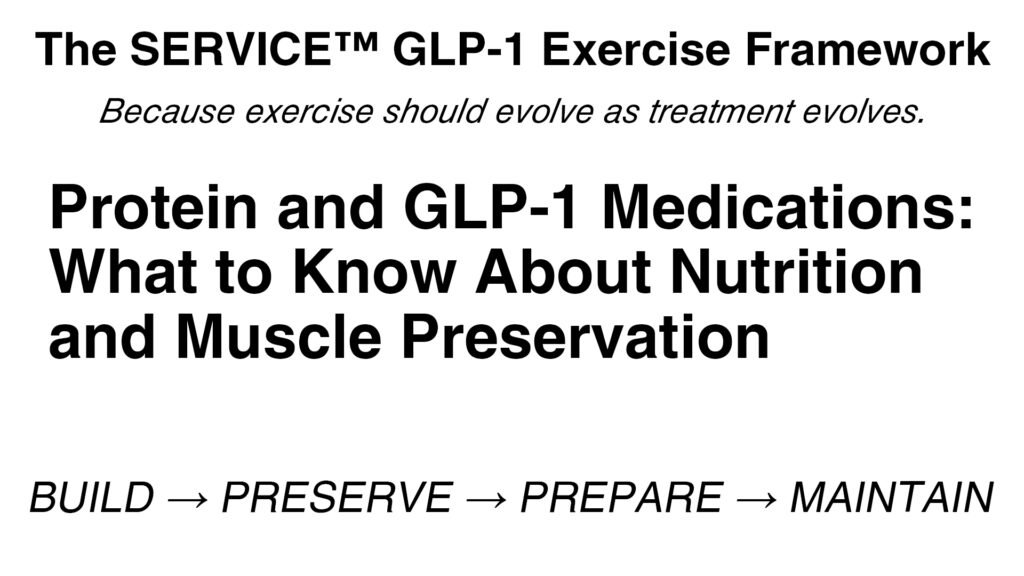
At YOUTRAINFITNESS®, the SERVICE™ GLP-1 Exercise Framework provides an educational structure for understanding exercise throughout the GLP-1 treatment journey.
Its four phases—BUILD, PRESERVE, PREPARE, and MAINTAIN—can help organize learning around exercise-related priorities.
Nutrition is an important consideration throughout these phases, particularly when the goal is to support strength, physical function, and sustainable physical activity.
BUILD: Establish a Foundation
BUILD focuses on understanding the foundations of exercise and developing realistic physical activity habits.
Nutrition education can complement this phase by helping people understand why adequate food intake matters when establishing an exercise routine.
PRESERVE: Understand Muscle and Strength
PRESERVE emphasizes muscle, strength, and physical function during weight loss.
This phase connects naturally with education about resistance training, protein adequacy, overall nutrition, and recovery.
PREPARE: Understand Changing Needs
PREPARE encourages consideration of changing exercise-related needs throughout treatment.
Changes in appetite, symptoms, physical abilities, and health may affect nutritional and exercise considerations.
People experiencing persistent difficulties with food intake should seek appropriate healthcare guidance.
MAINTAIN: Support Sustainable Habits
MAINTAIN focuses on long-term physical activity and sustainable fitness habits.
Adequate nutrition can support participation in physical activity and help people work toward their individual health and fitness goals.
The SERVICE™ framework is an educational model, not a clinically validated nutrition protocol or a guarantee of specific health outcomes.
Explore the framework and your other educational resources here:
https://youtrainfitness.com/service-glp-1-exercise-fitness-resource-center/
FREQUENTLY ASKED QUESTIONS ABOUT PROTEIN AND GLP-1 MEDICATIONS
FREQUENTLY ASKED QUESTIONS ABOUT PROTEIN AND GLP-1 MEDICATIONS
Should I eat more protein while taking a GLP-1 medication?
You should aim to meet your individual nutritional requirements, including adequate protein intake.
Whether you need to increase your protein intake depends on your current diet, health, nutritional status, and other factors.
A registered dietitian or qualified healthcare professional can help determine whether your current intake is appropriate.
Can protein help prevent muscle loss during GLP-1 weight loss?
Adequate protein supports normal tissue maintenance and repair and is an important consideration during weight loss.
However, protein alone cannot guarantee that muscle loss will be prevented.
Resistance training, overall nutritional adequacy, and other factors also influence muscle health.
What are the best protein foods for someone taking semaglutide or tirzepatide?
There is no single best protein food for everyone.
The best choices depend on your nutritional needs, preferences, medical circumstances, and food tolerance.
What if I can’t eat enough protein because I have no appetite?
If reduced appetite makes it difficult to eat enough, discuss your concerns with your healthcare professional.
A registered dietitian can help you assess your nutritional intake and identify practical strategies.
If you are persistently unable to eat or drink adequately, seek medical advice rather than relying on supplements or trying to force yourself to eat.
Should I drink a protein shake every day?
Not necessarily.
Protein supplements may be helpful for some people, but others can meet their needs through food.
Whether a supplement is appropriate depends on your overall diet, nutritional requirements, medical history, and preferences.
Can I build muscle while taking a GLP-1 medication?
Changes in strength and muscle mass vary between individuals.
Resistance training can support strength development, while adequate nutrition helps support the body’s normal adaptation and recovery processes.
Your results will depend on several factors, including your training, nutritional intake, health, and starting point.
Is protein more important than resistance training?
They serve different but complementary roles.
Protein provides amino acids needed for tissue maintenance and repair, while resistance training provides a stimulus for strength development and muscle adaptation.
A comprehensive approach considers both, alongside overall nutritional adequacy and recovery.
Do I need to speak with a dietitian?
A registered dietitian can be particularly helpful if you’re struggling to eat enough, experiencing significant appetite changes, concerned about muscle preservation, or unsure how to meet your nutritional needs.
Individualized guidance is also important if you have kidney disease, food intolerances, or other medical conditions that affect your diet.
THE BOTTOM LINE: PROTEIN IS ONE PART OF THE BIGGER PICTURE
THE BOTTOM LINE: PROTEIN IS ONE PART OF THE BIGGER PICTURE
Protein matters during GLP-1 treatment because it supplies amino acids that support normal tissue maintenance and repair.
However, muscle preservation involves more than protein intake alone.
Resistance training, adequate overall nutrition, recovery, and appropriate medical guidance all contribute to a comprehensive approach to health and fitness.
If your appetite has decreased, you’re struggling to eat enough, or you’re concerned about changes in strength, seek advice from qualified healthcare professionals.
You don’t need to follow someone else’s protein target or purchase supplements simply because they are popular online.
Instead, focus on understanding your individual nutritional needs and how nutrition can complement your exercise routine.
Your goal is not simply to consume more protein. It is to support your overall health, strength, and physical function throughout your GLP-1 journey.
Explore More GLP-1 Exercise Resources
YOUTRAINFITNESS® provides educational resources to help people understand exercise, muscle preservation, physical function, and fitness during GLP-1 treatment.
Explore the SERVICE™ GLP-1 Exercise Framework and additional resources in our SERVICE™ GLP-1 Exercise & Fitness Resource Center.
RESEARCH REFERENCES
RESEARCH REFERENCES
Keep this section at the end of your WordPress article so readers can explore the supporting guidance.
- American Diabetes Association. Pharmacologic Treatment of Obesity in Adults: Standards of Care in Overweight and Obesity.
Published in 2026, this clinical guidance discusses individualized nutrition recommendations, monitoring nutritional adequacy, preventing protein insufficiency, and incorporating muscle-strengthening activity during obesity treatment.
Full URL:
https://doi.org/10.2337/doci25-0008
- American Diabetes Association. Obesity and Weight Management for the Prevention and Treatment of Diabetes: Standards of Care in Diabetes—2026.
This guidance discusses weight management, nutritional adequacy, physical activity, and the importance of monitoring for potential nutritional deficiencies during intentional weight loss.
Full URL:
https://doi.org/10.2337/dc26-S008
- American Diabetes Association. Facilitating Positive Health Behaviors and Well-being to Improve Health Outcomes: Standards of Care in Diabetes—2026.
This resource discusses nutrition, physical activity, and protein intake in the context of diabetes care. Its recommendations should be interpreted in the context of the individual’s health and nutritional needs.
Full URL:
https://diabetesjournals.org/care/article/49/Supplement_1/S89/163932
- Centers for Disease Control and Prevention. What Counts as Physical Activity for Adults?
This resource explains general physical activity recommendations, including aerobic and muscle-strengthening activities.
Full URL:
https://www.cdc.gov/physical-activity-basics/adding-adults/what-counts.html
Learn More About GLP-1 Exercise
For more detailed information about exercising while taking GLP-1 medications, visit our:
This resource center provides additional educational information about GLP-1 exercise, strength training, muscle preservation, progression, and related topics.
Exercise Physiology Services in Durham, NC
This GLP-1 exercise program is part of our Exercise Physiology Services in Durham, NC.
Link: Certified Exercise Physiologist in Durham NC