

ABOUT THE EXERCISE PHYSIOLOGIST
ABOUT THE EXERCISE PHYSIOLOGIST

Patrick Service, M.S., ACSM-EP® is an Exercise Physiologist and founder of YOUTRAINFITNESS® in Durham, North Carolina. With 30+ years of professional experience in exercise and fitness, Patrick specializes in helping individuals safely begin and maintain exercise programs, including those using GLP-1 medications for weight management.
He developed the SERVICE™ GLP-1 Exercise Framework, an evidence-informed, four-phase conceptual framework designed to organize exercise considerations throughout different stages of GLP-1 treatment.
His approach emphasizes strength, muscle preservation, physical function, fitness, sustainable physical activity and collaboration with healthcare professionals.
Learn more about Patrick Service
The framework emphasizes:
- Resistance training
- Strength development
- Physical function
- Exercise adherence
- Sustainable physical activity
- Long-term health and fitness
SERVICE™ is designed to complement medical care—not replace it.
CLINICAL EXERCISE REFERRAL OVERVIEW FOR HEALTHCARE PROVIDERS
Inquiring mind:

Why Did You Develop the SERVICE™ GLP-1 Exercise Framework?

Patrick's Response:"After working with individuals using GLP-1 medications, I noticed a consistent gap in care. Most people received excellent guidance about their medication, but very little guidance on how their exercise program should be adapted throughout treatment.

I developed the SERVICE™ GLP-1 Exercise Framework to help fill that gap.

The framework provides an evidence-informed approach to adjusting exercise throughout each phase of GLP-1 therapy, with the goals of preserving muscle, improving strength and physical function, and helping individuals develop sustainable exercise habits that support long-term weight management.

I also wanted the framework to provide a supportive, nonjudgmental approach for individuals using GLP-1 medications. People can sometimes experience judgment within fitness settings, particularly when their decision to use medication is perceived as taking the “easy way out.” I believe our role as exercise professionals is not to judge the path someone has taken, but to meet people where they are and provide safe, supportive, and accessible guidance.

The SERVICE™ GLP-1 Exercise Framework was therefore designed to be accessible across a range of fitness levels, supporting individuals who are new to exercise as well as those with previous exercise experience.

I encourage healthcare professionals, exercise specialists, and individuals interested in this topic to review the framework independently and evaluate it based on the supporting evidence."

— Patrick Service, MS, ACSM-EP
FOR HEALTHCARE PROVIDERS
FOR HEALTHCARE PROVIDERS
Have a Patient Who May Benefit From Individualized Exercise Support?
Patients using GLP-1 medications may have questions about how to begin exercising, how to incorporate resistance training, how to progress their exercise program, or how to maintain an exercise routine over time.
An Exercise Physiologist can provide individualized exercise education and programming within the scope of exercise physiology.
Healthcare Provider Referral
👉 Healthcare Provider Referral FormWHAT IS THE SERVICE GLP-1 EXERCISE FRAMEWORK
WHAT IS THE SERVICE GLP-1 EXERCISE FRAMEWORK
The SERVICE™ GLP-1 Exercise Framework is a four-phase, evidence-informed conceptual framework for organizing exercise considerations throughout different stages of the GLP-1 treatment journey.
The framework recognizes that exercise needs may change as an individual’s:
- Medication treatment changes
- Exercise capacity develops
- Body weight changes
- Energy availability changes
- Strength and fitness improve
- Long-term goals evolve
Rather than viewing exercise as a single, static prescription, SERVICE™ proposes that exercise priorities can evolve over time.
BUILD → PRESERVE → PREPARE → MAINTAIN
|
Phase |
General Treatment Context |
Exercise Emphasis |
|
BUILD |
Initiation / early treatment |
Establish consistency, exercise tolerance, technique, and foundational strength |
|
PRESERVE |
Active treatment / weight loss |
Progressive resistance training, strength, and physical fitness |
|
PREPARE |
Treatment transition |
Maintain strength and develop sustainable exercise habits |
|
MAINTAIN |
Long-term maintenance |
Lifelong strength, fitness, physical activity, and functional health |
Important: These phases are conceptual exercise-planning categories. They are not intended to dictate medication management, dosing, tapering, or discontinuation.
WHY EXERCISE MAY BE AN IMPORTANT PART OF GLP-1 TREATMENT
WHY EXERCISE MAY BE AN IMPORTANT PART OF GLP-1 TREATMENT
GLP-1-based therapies can be an important component of medical weight-management treatment.
During weight loss, however, changes can occur in both fat mass and lean body mass. The term lean body mass does not represent skeletal muscle alone and can include water, organs, connective tissue, bone, and other non-fat tissues.
For this reason, changes in body weight or DXA-derived lean mass should not automatically be interpreted as equivalent to skeletal-muscle loss.
At the same time, maintaining strength and physical function remains important during weight loss.
Resistance exercise provides an important stimulus for developing and maintaining muscular strength and physical capacity.
The SERVICE™ framework therefore places particular emphasis on appropriately individualized resistance training, physical activity, progression, and long-term exercise adherence.
For the scientific rationale and supporting literature, see:
SERVICE™ GLP-1 Exercise Framework — Research & Evidence
THE FOUR PHASES
THE FOUR PHASES
PHASE 1 — BUILD
PHASE 1 — BUILD
Initiation / Early Treatment
Exercise Goal: Establish the Foundation
The initial stage may be an opportunity to establish exercise consistency, confidence, movement competency, and tolerance.
Exercise Considerations
- Establish a sustainable exercise routine
- Learn fundamental movement patterns
- Introduce resistance training
- Develop exercise confidence
- Improve exercise tolerance
- Begin building foundational strength
Potential Exercise Approach
- Beginner-appropriate resistance training
- Full-body training
- Appropriate intensity and volume
- Emphasis on technique
- Gradual progression
- Consistency before complexity
Primary Objective
Build the foundation for sustainable exercise participation.
PHASE 2 — PRESERVE
PHASE 2 — PRESERVE
Active Treatment / Weight-Loss Phase
Exercise Goal: Progress Strength and Physical Fitness
As an individual becomes more experienced with exercise, the focus can progress from simply participating in exercise toward improving the effectiveness and progression of training.
Exercise Considerations
- Progress resistance training
- Develop strength
- Support physical function
- Maintain exercise consistency
- Develop cardiovascular fitness
- Individualize training volume and intensity
Potential Exercise Approach
- Progressive resistance training
- Individualized exercise programming
- Appropriate progressive overload
- Continued cardiovascular exercise
- Periodic adjustment according to exercise response
Primary Objective
Progressively strengthen and condition the body while supporting continued physical function.
PHASE 3 — PREPARE
PHASE 3 — PREPARE
Treatment Transition
Exercise Goal: Protect Progress and Build Independence
When treatment circumstances change, exercise can continue to provide an opportunity to reinforce sustainable behaviors and physical capacity.
This phase emphasizes maintaining the improvements developed during earlier stages while preparing for long-term exercise independence.
Exercise Considerations
- Maintain strength
- Continue resistance training
- Maintain cardiovascular fitness
- Reinforce sustainable exercise habits
- Increase confidence with independent exercise
- Adapt programming to changing circumstances
Potential Exercise Approach
- Continued resistance training
- Cardiovascular exercise
- Sustainable weekly routines
- Individualized adjustments
- Greater emphasis on long-term adherence
Primary Objective
Maintain progress while developing sustainable exercise independence.
PHASE 4 — MAINTAIN
PHASE 4 — MAINTAIN
Long-Term Maintenance
Exercise Goal: Sustain Long-Term Health and Physical Function
Long-term exercise should become an ongoing component of a healthy lifestyle rather than a temporary intervention.
Exercise Considerations
- Maintain strength
- Maintain physical fitness
- Support physical function
- Continue regular physical activity
- Develop sustainable lifelong habits
- Adapt exercise as health and fitness change
Potential Exercise Approach
- Consistent resistance training
- Regular cardiovascular activity
- Active lifestyle habits
- Long-term progression
- Periodic reassessment and adjustment
Primary Objective
Make physical activity and exercise part of a sustainable long-term lifestyle.
WHEN MIGHT AN EXERCISE REFERRAL BE APPROPRIATE?
WHEN MIGHT AN EXERCISE REFERRAL BE APPROPRIATE?
Healthcare providers may consider exercise physiology referral for patients who:
- Are beginning an exercise program while using a GLP-1 medication
- Have limited resistance-training experience
- Are uncertain how to begin exercising
- Want individualized exercise instruction
- Are concerned about maintaining strength during weight loss
- Need assistance progressing beyond general physical-activity recommendations
- Want structured support developing sustainable exercise habits
- Are transitioning between stages of treatment
- Want continued exercise support during long-term weight maintenance
Patients may ask:
1. “How should I exercise while taking a GLP-1 medication?”
2. “How can I incorporate resistance training?”
3. “How should my exercise program progress as I become stronger?”
4. “What should I do to maintain my exercise habits long term?”
These are areas where individualized exercise physiology support may be appropriate.
WHAT THE EXERCISE PHYSIOLOGIST PROVIDES
WHAT THE EXERCISE PHYSIOLOGIST PROVIDES
Exercise physiology services may include:
Exercise Readiness & Orientation
- Review of current exercise experience
- Discussion of exercise goals
- Identification of barriers to participation
- Exercise education
- Introduction to appropriate movement patterns
Resistance Training
- Exercise selection
- Technique instruction
- Resistance and volume guidance
- Progressive training
- Strength development
- Individualized programming
Cardiovascular & Physical Activity Programming
- Aerobic exercise guidance
- Activity progression
- Development of sustainable movement habits
- Integration of exercise into daily life
Long-Term Exercise Planning
- Exercise progression
- Program modification
- Maintenance-oriented exercise planning
- Development of independent exercise skills
COLLABORATION WITH THE HEALTHCARE TEAM
COLLABORATION WITH THE HEALTHCARE TEAM
SERVICE™ Is Designed to Complement Medical Care
The SERVICE™ GLP-1 Exercise Framework is designed to support—not replace—medical treatment.
Exercise programming is individualized within the scope of exercise physiology and may take into consideration:
- Current physical abilities
- Exercise history
- Exercise tolerance
- Functional considerations
- Treatment stage
- Patient goals
- Healthcare-provider recommendations
The patient’s healthcare provider remains responsible for medical diagnosis, medication management, treatment decisions, and other aspects of medical care.
Healthcare Provider
The healthcare team remains responsible for:
- Diagnosis
- Medical evaluation
- Medication management
- Medication dosing decisions
- Treatment decisions
- Medical clearance when appropriate
- Overall medical care
Exercise Physiologist
The Exercise Physiologist provides:
- Exercise education
- Exercise readiness guidance
- Individualized exercise programming
- Resistance-training instruction
- Exercise progression
- Physical-activity guidance
- Support developing sustainable exercise habits
WHAT THE EXERCISE PHYSIOLOGIST DOES NOT DO
WHAT THE EXERCISE PHYSIOLOGIST DOES NOT DO
The Exercise Physiologist does not:
- Diagnose medical conditions
- Prescribe or modify medications
- Determine GLP-1 dosing
- Direct medication tapering or discontinuation
- Replace the patient’s healthcare provider
- Provide medical treatment outside the scope of exercise physiology
Medication decisions remain with the prescribing healthcare professional.
REFERRAL CONSIDERATIONS
REFERRAL CONSIDERATIONS
A healthcare provider may refer a patient when individualized exercise guidance would be beneficial beyond general physical-activity recommendations.
Examples include patients who need:
- Assistance beginning resistance training
- Exercise technique instruction
- A structured progression plan
- Individualized exercise programming
- Support developing exercise confidence
- Home-based exercise programming
- Gym-based exercise programming
Guidance developing sustainable exercise habits
COMMUNICATION WITH THE HEALTHCARE TEAM
COMMUNICATION WITH THE HEALTHCARE TEAM
When appropriate and with appropriate patient authorization, communication with the healthcare team can help ensure that exercise programming is consistent with the patient’s overall care plan.
Exercise programming may be adjusted based on:
- Changes in physical capacity
- Exercise tolerance
- Patient goals
- Functional considerations
- Healthcare-provider recommendations
- Changes in the individual’s circumstances
The objective is not to create a separate treatment pathway, but to provide specialized exercise support within a multidisciplinary care model.
ABOUT THE SERVICE FRAMEWORK AND THE EVIDENCE
ABOUT THE SERVICE FRAMEWORK AND THE EVIDENCE
The SERVICE™ GLP-1 Exercise Framework is an evidence-informed conceptual framework.
Research supporting individual components of the framework includes literature involving:
- GLP-1-based pharmacotherapy
- Weight loss and body composition
- Resistance exercise
- Lean-mass preservation
- Strength and physical function
- Protein and nutritional considerations
- Exercise combined with GLP-1 therapy
- Weight maintenance following medication changes
However, the four-phase SERVICE™ framework itself has not yet been prospectively validated as a clinical intervention.
The purpose of presenting the framework as evidence-informed is to identify and organize clinically relevant exercise considerations—not to imply that the framework has already been proven superior to other approaches.
Interested in the Research?
EXPLORE SERVICE™ RESEARCH & EVIDENCE
HEALTHCARE PROVIDER REFERRAL
HEALTHCARE PROVIDER REFERRAL
Have a Patient Who May Benefit From Individualized Exercise Support?
If you believe a patient may benefit from structured exercise physiology services, you may submit a referral below.
HEALTHCARE PROVIDER REFERRAL FORM
Patients may also contact YOUTRAINFITNESS® directly to discuss exercise services.
OUR PRIVATE YOUTRAINFITNESS® FACILITY
OUR PRIVATE YOUTRAINFITNESS® FACILITY

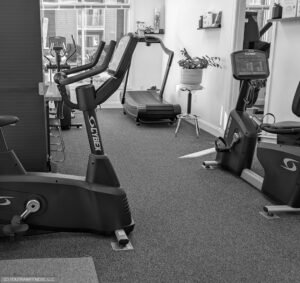
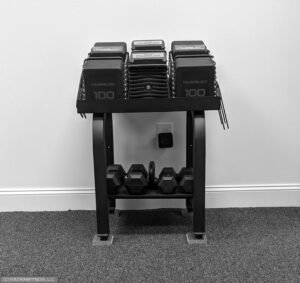
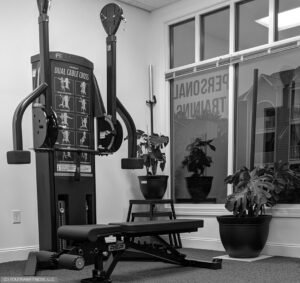



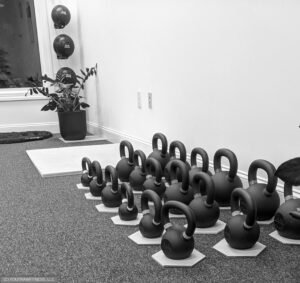
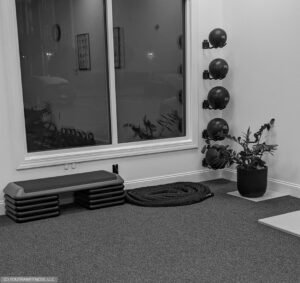

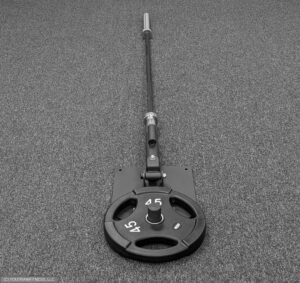
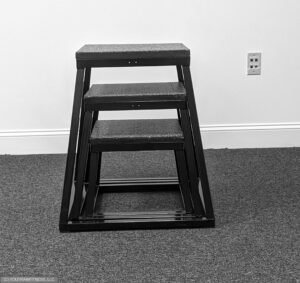
Individualized exercise physiology services are provided in a private training environment in Durham, North Carolina.
Services are provided by appointment and are designed around the individual’s exercise experience, abilities, goals, and needs.
Patrick Service, MS, ACSM-EP
Exercise Physiologist
Founder, YOUTRAINFITNESS®
Durham, North Carolina
Phone: 919-627-8348
Our private facility is located in South Durham, NC and serving surrounding communities including:
- Durham
- Cary – 1.7 miles from Northwest Cary
- Morrisville – 3 miles from Morrisville
- Research Triangle Park (RTP) – 0.3 miles from RTP
- Surrounding Triangle communities
For referral information or patient consultations:
👉 Healthcare Provider Referral FormTHE GOAL
THE GOAL
GLP-1-based therapies can be an important component of a person’s health journey.
Exercise provides an opportunity to develop and maintain:
- Strength
- Physical fitness
- Physical function
- Exercise confidence
- Sustainable physical-activity habits
The purpose of the SERVICE™ GLP-1 Exercise Framework is to provide a structured way to consider exercise across changing stages of treatment while keeping individualized patient needs at the center of exercise planning.
Medication management remains with the healthcare team. Exercise programming remains within the scope of exercise physiology. The goal is to help the two work together in support of the patient’s long-term health.
Learn More About GLP-1 Exercise
For more detailed information about exercising while taking GLP-1 medications, visit our:
This resource center provides additional educational information about GLP-1 exercise, strength training, muscle preservation, progression, and related topics.
Exercise Physiology Services in Durham, NC
This GLP-1 exercise program is part of our Exercise Physiology Services in Durham, NC.
Link: Certified Exercise Physiologist in Durham NC