
ABOUT THE EXERCISE PHYSIOLOGIST
ABOUT THE EXERCISE PHYSIOLOGIST

Patrick Service, M.S., ACSM-EP® is an Exercise Physiologist and founder of YOUTRAINFITNESS® in Durham, North Carolina. With 30+ years of professional experience in exercise and fitness, Patrick specializes in helping individuals safely begin and maintain exercise programs, including those using GLP-1 medications for weight management.
He developed the SERVICE™ GLP-1 Exercise Framework, an evidence-informed, four-phase conceptual framework designed to organize exercise considerations throughout different stages of GLP-1 treatment.
His approach emphasizes strength, muscle preservation, physical function, fitness, sustainable physical activity and collaboration with healthcare professionals.
Learn more about Patrick Service
HOW TO START EXERCISING ON GLP-1 MEDICATIONS: A BEGINNER'S GUIDE
HOW TO START EXERCISING ON GLP-1 MEDICATIONS: A BEGINNER'S GUIDE
Taking a GLP-1 medication for weight management can bring significant changes to your health journey. You may be losing weight, noticing changes in your appetite, or adjusting to a different daily routine.
You may also be wondering how to start exercising.
Should you begin walking? Do you need to lift weights? What if you haven’t exercised in years? And how can you approach physical activity when your energy levels or appetite have changed?
If you’re asking these questions, you’re not alone.
Starting an exercise routine while taking GLP-1 medications doesn’t require an advanced fitness plan. It requires an approach that considers your current abilities, health, and goals.
Exercise can support strength, physical function, cardiovascular health, and overall well-being during weight management. Resistance training deserves particular attention because maintaining muscle strength and function is an important consideration during weight loss. Research and clinical guidance support incorporating resistance exercise into comprehensive weight-management care.
In this beginner’s guide, we’ll explore how to get started, what types of exercise to consider, how to build consistency, and how to recognize progress beyond the scale.
| 1. How to Start Exercising on GLP-1 Medications: A Beginner’s Guide | How to Start Exercising on GLP-1 Medications - Handout and Worksheets (Free for Workshop Participants) |
| 2. Muscle Preservation During GLP-1 Weight Loss: What You Need to Know | Muscle Preservation During GLP-1 Weight Loss - Handout and Worksheets (Free for Workshop Participants) |
| 3. Protein and GLP-1 Medications: What to Know About Nutrition and Muscle Preservation | Protein and GLP-1 Medications - Handout and Worksheets (Free for Workshop Participants) |
| 4. Why You Feel Tired on GLP-1 Medications: Understanding Energy, Exercise, and Recovery | Why You Feel Tired on GLP-1 Medications - Handout and Worksheets (Free for Workshop Participants) |
| 5. How to Measure Exercise Progress During GLP-1 Weight Loss: Beyond the Scale | How to Measure Exercise Progress During GLP-1 Weight Loss - Handout and Worksheets (Free for Workshop Participants) |
| The Exercise Companion Guide - Foundational and Progressive Movements (Free for Workshop Participants) | Protect Your Muscles While Losing Weight on GLP-1 Medication Workbook (Free for Workshop Participants) |
WHY EXERCISE MATTERS DURING GLP-1 TREATMENT
WHY EXERCISE MATTERS DURING GLP-1 TREATMENT
GLP-1 receptor agonists, including semaglutide, and dual GIP/GLP-1 receptor agonists, such as tirzepatide, are used for specific medical indications, including weight management.
These medications can help people lose weight, but changes in body weight don’t tell the whole story about physical health.
Weight loss can involve reductions in both fat mass and lean mass. Lean mass includes skeletal muscle, but it also includes other tissues and body components. Therefore, a change in lean mass should not automatically be interpreted as an equivalent change in muscle mass.
This is one reason exercise deserves attention during weight management.
An appropriate exercise routine may help you work toward several goals:
- Maintaining or improving muscle strength.
- Supporting physical function and everyday activities.
- Improving or maintaining aerobic fitness.
- Establishing sustainable physical activity habits.
- Supporting cardiovascular and metabolic health.
- Maintaining confidence in your ability to move and participate in daily life.
Exercise is not a guarantee against muscle loss during weight reduction, and individual results vary. However, resistance training and aerobic activity are important components of a comprehensive approach to health.
The American Diabetes Association’s clinical guidance on obesity treatment discusses resistance training, nutrition, and the assessment of muscle strength and physical function during weight management.
The goal isn’t simply to lose weight. It’s to support your health and physical capabilities throughout the process.
START WITH YOUR CURRENT FITNESS LEVEL
START WITH YOUR CURRENT FITNESS LEVEL
If you haven’t exercised regularly, you don’t need to begin with a demanding workout program.
Start by considering what you can comfortably do today.
For one person, that might mean walking for 10 minutes. For another, it might mean performing gentle movement at home or beginning a supervised resistance-training program.
Your starting point should reflect your current activity level, physical abilities, health conditions, and previous exercise experience.
Ask yourself a few questions
Before beginning, consider:
- How much physical activity do I currently do?
- Can I walk comfortably for several minutes?
- Do I have any balance, mobility, joint, or pain-related concerns?
- Have I been advised to limit certain activities?
- Do I have a health condition that may affect exercise?
- Have I experienced symptoms from my medication that interfere with physical activity?
If you’ve been inactive for a long time, have a chronic health condition, or are considering vigorous exercise, discuss an appropriate starting point with your healthcare professional.
A qualified exercise professional such as an Exercise Physiologist, can also help you select activities and modifications that match your abilities.
Begin with manageable goals
Rather than immediately committing to an ambitious exercise schedule, choose a goal you can realistically achieve.
For example:
- Walk for five to 10 minutes at a comfortable pace.
- Practice a few simple movements with appropriate support.
- Schedule two short periods of physical activity during the week.
- Explore a beginner-friendly resistance-training session with qualified guidance.
These are examples, not universal prescriptions. Your appropriate starting point may be different.
The important thing is to begin at a level you can tolerate and build gradually as your confidence and capacity improve.
The Centers for Disease Control and Prevention emphasizes that some physical activity is better than none and encourages adults to choose activities that match their abilities.
MAKE WALKING OR ANOTHER FORM OF AEROBIC ACTIVITY YOUR STARTING POINT
MAKE WALKING OR ANOTHER FORM OF AEROBIC ACTIVITY YOUR STARTING POINT
Walking is a practical option for many beginners because it requires relatively little equipment and can often be adapted to different fitness levels.
However, walking isn’t your only option.
Depending on your preferences and abilities, aerobic activities may include:
- Walking outdoors or on a treadmill.
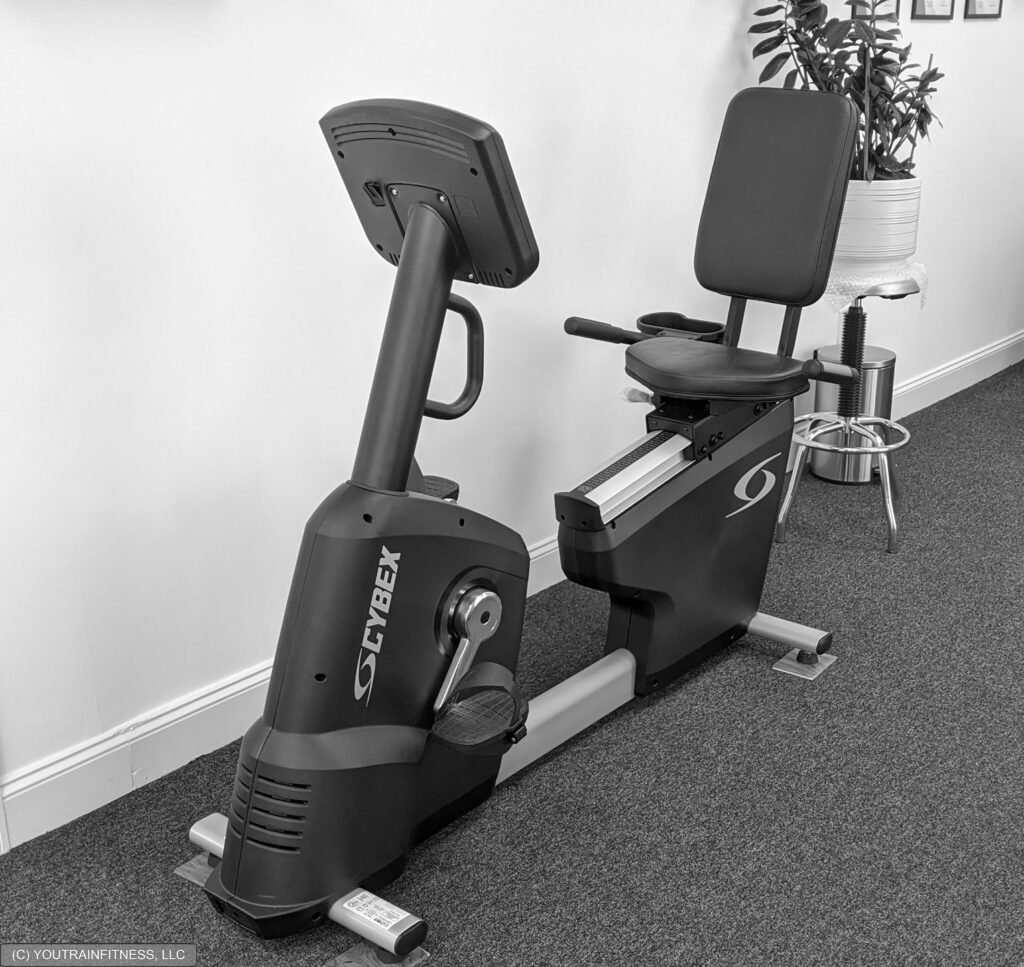
- Riding a stationary or regular bicycle.
- Swimming.
- Water-based exercise.
- Using an appropriate cardio machine.
- Participating in other activities that increase your heart rate.
Choose an activity you enjoy and can perform comfortably.
How long should you exercise?
If you’re new to physical activity, begin with a duration that feels manageable.
You might start with a short walk and gradually increase the time as your tolerance improves.
For example, a beginner could use the following progression as an illustration:
|
Stage |
Example activity goal |
|
Getting started |
Walk for five to 10 minutes at a comfortable pace, if tolerated. |
|
Building consistency |
Repeat short walks on several days of the week. |
|
Increasing duration |
Gradually add time when the current duration feels manageable. |
|
Developing a routine |
Work toward a regular schedule that fits your abilities and goals. |
This is an illustrative progression, not a required schedule. You may need to spend more time at each stage, modify the activity, or choose a different starting point.
What about the general physical activity recommendations?
For most adults, the general recommendation is at least 150 minutes of moderate-intensity aerobic activity each week, along with muscle-strengthening activity on at least two days per week.
These recommendations are goals to work toward, not a requirement to achieve immediately when beginning exercise.
Moderate-intensity activity generally increases your breathing and heart rate while still allowing you to talk, although singing would be difficult.
If you’re currently inactive, shorter periods of movement can be a useful starting point.
You don’t have to reach the recommended weekly target during your first week. Build a routine that you can sustain and progress appropriately.
WHY YOU SHOULD INCLUDE RESISTANCE TRAINING
WHY YOU SHOULD INCLUDE RESISTANCE TRAINING
If you’re taking a GLP-1 medication and want to build a well-rounded exercise routine, resistance training deserves special attention.
Resistance training involves working your muscles against resistance. This can include free weights, resistance bands, weight machines, and appropriately selected bodyweight exercises.
It can help improve strength and physical function, and it is an important consideration during weight loss.
A 2024 review published in Diabetes Care examined incretin-based weight-loss medications and the potential role of resistance exercise in supporting changes in body composition. The authors discussed the importance of resistance training alongside these medications, while recognizing the need for further research.
Research reference: https://doi.org/10.2337/dci24-0018
Do you need to lift heavy weights?
No. Beginners do not need to start with heavy weights.
Your initial goal should be to learn appropriate movement techniques, select suitable resistance, and develop a routine you can perform safely.
Depending on your abilities, beginner-friendly options might include:
- Practicing sit-to-stand movements from a stable chair.
- Performing wall push-ups.
- Using light resistance bands.
- Practicing supported heel raises.
- Using weight machines with appropriate instruction.
- Performing simple exercises under the guidance of a qualified professional.
These are examples of exercise options, not a personalized prescription. Some movements may be inappropriate for people with particular injuries, balance limitations, or medical conditions.
How often should beginners perform resistance training?
General physical activity guidelines recommend muscle-strengthening activities on at least two days per week for adults.
When you’re beginning, however, your appropriate frequency and workload depend on your current fitness, health, and recovery.
You may need to begin with fewer sessions or use supervised exercise before progressing toward a more comprehensive routine.
A qualified exercise professional can help you learn proper technique and determine an appropriate starting level.
What should your first resistance-training session look like?
Your first session doesn’t need to be complicated.
An introductory session might involve learning a few basic movement patterns, practicing with light resistance, and becoming familiar with the equipment.
For example, with appropriate instruction and modifications, a beginner might learn a supported squat or sit-to-stand movement, a wall push-up, and a resistance-band pulling movement.
The emphasis should be on learning, comfort, and technique rather than exhausting yourself.
The objective is to establish a foundation for consistent strength training, not to complete the hardest workout possible.
LEARN TO RECOGNIZE YOUR BODY'S RESPONSE TO EXERCISE
LEARN TO RECOGNIZE YOUR BODY'S RESPONSE TO EXERCISE
Your experience with a GLP-1 medication may influence how you feel during physical activity.
Some people experience nausea, vomiting, diarrhea, constipation, reduced appetite, or fatigue during treatment. The type, severity, and duration of symptoms vary.
These experiences can affect your ability to exercise, particularly when symptoms interfere with eating, drinking, or normal daily activities.
That doesn’t mean you should avoid exercise altogether. It means you should pay attention to how you’re feeling and adjust appropriately.
What if you feel tired?
If you feel mildly tired, a shorter or easier session may be more appropriate than your usual workout.
You might choose a comfortable walk or gentle movement instead of a demanding training session.
However, persistent or unusual fatigue should not simply be attributed to your medication. It may have several causes and deserves medical attention if it continues or interferes with daily life.
What if you experience nausea?
If nausea is affecting your ability to exercise, consider postponing or reducing the activity rather than forcing yourself through a difficult session.
Avoid exercising when symptoms make it difficult to remain comfortable, hydrated, or adequately nourished.
Contact your healthcare professional if symptoms persist or interfere with your normal activities.
Severe abdominal pain, fainting, chest pain, or difficulty breathing warrant urgent medical assessment. Persistent vomiting or an inability to keep fluids down also requires prompt medical advice.
What if your appetite has decreased?
Some people find that reduced appetite makes it more difficult to maintain adequate food and fluid intake.
Nutrition is important when you’re exercising, particularly during weight loss.
If you’re struggling to eat or drink enough, discuss this with your healthcare professional. A registered dietitian familiar with weight management may also help you identify an appropriate nutritional approach.
Do not assume that exercise can compensate for inadequate nutrition or persistent medication-related symptoms.
Should you exercise differently on injection day?
There is no single exercise schedule that is appropriate for everyone based solely on the day they take their medication.
Pay attention to your own symptoms and discuss recurring exercise difficulties with your healthcare professional.
You should not change your medication schedule or dosage to accommodate exercise without guidance from your prescribing clinician.
BUILD A WEEKLY ROUTINE YOU CAN MAINTAIN
BUILD A WEEKLY ROUTINE YOU CAN MAINTAIN
One of the most common beginner mistakes is attempting to change everything at once.
You might feel motivated to walk every day, begin lifting weights, change your diet, and dramatically increase your activity in the same week.
That approach can become difficult to sustain.
Instead, start by creating a realistic routine that reflects your current abilities.
Example of a beginner’s exercise week
The following schedule is an illustration of how someone might organize a few short activity sessions. It is not a personalized exercise prescription, and some people will need a different starting point.
|
Day |
Example activity |
|
Monday |
Comfortable walk for a duration that feels manageable |
|
Tuesday |
Rest or gentle movement, depending on how you feel |
|
Wednesday |
Beginner resistance-training session with appropriate instruction |
|
Thursday |
Comfortable walk or another suitable aerobic activity |
|
Friday |
Rest or gentle movement |
|
Saturday |
Beginner resistance-training session, if appropriate for your recovery |
|
Sunday |
Optional enjoyable physical activity or rest |
You can shorten sessions, change activities, or include additional recovery days as needed.
If you’re currently very inactive, even this example may be too much to begin with. Start with less if necessary.
How should you progress?
Progress gradually rather than increasing the duration, resistance, and intensity of every activity at once.
For example, if you have been walking for a short period and it consistently feels manageable, you might gradually increase the duration.
If you have begun resistance training, focus first on technique and consistency before considering increases in resistance or training volume.
Pay attention to how you feel during exercise and afterward.
If your routine repeatedly leaves you excessively fatigued or interferes with daily activities, review it with a qualified professional.
A good beginner routine is one you can adapt, recover from, and continue—not one that leaves you exhausted.
MEASURE PROGRESS BEYOND WEIGHT LOSS
MEASURE PROGRESS BEYOND WEIGHT LOSS
It’s natural to pay attention to changes on the scale when taking a medication for weight management.
However, your weight does not tell you everything about your exercise progress.
You may also want to monitor:
- Strength: Are you gradually improving your performance in familiar resistance exercises?
- Physical function: Are everyday activities becoming easier?
- Aerobic activity: Can you participate in suitable activities more comfortably?
- Consistency: Are you developing a sustainable exercise routine?
- Recovery: Are you tolerating your activities appropriately?
You don’t need to measure everything at once.
Choose a few indicators that reflect your goals and record them periodically.
For more information, read the companion article: How to Measure Exercise Progress During GLP-1 Weight Loss: Beyond the Scale
Tracking progress should help you recognize useful patterns, not create pressure to achieve a particular result every week.
COMMON EXERCISE MISTAKES TO AVOID DURING GLP-1 TREATMENT
COMMON EXERCISE MISTAKES TO AVOID DURING GLP-1 TREATMENT
When you’re starting an exercise routine, a few common mistakes can make it harder to establish sustainable habits.
Trying to do too much too soon
You don’t need to achieve every physical activity recommendation immediately.
Increasing your exercise workload too quickly may leave you overly fatigued or increase your risk of injury.
Begin at an appropriate level and progress gradually.
Focusing only on cardio
Walking and other aerobic activities offer important health benefits, but they don’t necessarily provide the same muscle-strengthening stimulus as resistance training.
For a well-rounded approach, consider both aerobic and muscle-strengthening activities when appropriate for your health and abilities.
Comparing yourself with other people
Your starting point, health, exercise history, and medication experience may differ from those of other people.
Focus on your own progress rather than trying to match someone else’s exercise routine.
Ignoring nutrition and recovery
Exercise is only one component of your health and fitness journey.
Adequate nutrition, hydration, sleep, and recovery all deserve attention.
If medication-related symptoms make it difficult to eat or drink adequately, consult your healthcare professional rather than simply reducing your exercise recovery time or pushing through.
Exercising through concerning symptoms
Significant dizziness, unusual weakness, chest pain, fainting, or severe abdominal pain should not be treated as ordinary exercise discomfort.
Stop exercising when concerning symptoms occur and seek appropriate medical care. Severe symptoms may require urgent evaluation.
Expecting immediate results
Strength, endurance, and physical function develop over time.
Some improvements may become noticeable relatively quickly, while others require longer periods of consistent activity.
Progress may fluctuate. Focus on establishing sustainable habits rather than expecting a perfectly linear pattern.
HOW THE SERVICE™ GLP-1 EXERCISE FRAMEWORK FITS INTO YOUR JOURNEY
HOW THE SERVICE™ GLP-1 EXERCISE FRAMEWORK FITS INTO YOUR JOURNEY
At YOUTRAINFITNESS®, the SERVICE™ GLP-1 Exercise Framework offers an educational structure for understanding exercise throughout the GLP-1 treatment journey.
Its four phases are BUILD, PRESERVE, PREPARE, and MAINTAIN.
Each phase addresses a different aspect of exercise education and reflects changing exercise priorities throughout treatment. The phases may overlap, and the appropriate exercise strategy depends on the individual rather than following a rigid timeline.
BUILD: Establish Your Foundation
BUILD focuses on understanding the foundations of physical activity and exercise.
For beginners, this can include identifying appropriate activities, understanding current abilities, developing realistic goals, learning appropriate movement patterns, and establishing consistent movement habits.
PRESERVE: Support Muscle, Strength, and Physical Function
PRESERVE emphasizes the importance of muscle, strength, and physical function during weight loss.
Resistance training is an important consideration, alongside appropriate nutrition and recovery. The focus extends beyond muscle preservation to supporting the physical capabilities needed for everyday activities and long-term independence.
PREPARE: Respond to Changing Needs and Treatment Transitions
PREPARE encourages individuals to recognize changing circumstances and adapt their exercise habits when appropriate as treatment progresses.
For some individuals, this phase may include preparing for a possible reduction or discontinuation of GLP-1 medication under the guidance of their prescribing healthcare professional.
Preparation may involve:
- Establishing consistent resistance-training habits.
- Supporting strength and physical function.
- Developing sustainable aerobic and daily physical activity.
- Building confidence and independence with exercise.
- Recognizing potential changes in appetite, energy, and activity as treatment circumstances change.
- Discussing long-term medication and weight-management plans with the healthcare team.
The objective is to establish sustainable exercise and lifestyle habits that can continue beyond the active weight-loss phase.
MAINTAIN: Develop Sustainable Long-Term Exercise and Health Habits
MAINTAIN focuses on long-term physical activity, continued strength development, and sustainable habits that support physical function and weight management.
Depending on individual circumstances and medical guidance, this phase may involve maintaining progress without GLP-1 medication or continuing medication at a clinician-directed maintenance dose.
The focus is on maintaining strength, physical function, fitness, and sustainable lifestyle habits rather than relying exclusively on medication for weight management.
Exercise and lifestyle habits remain important regardless of medication status.
An Important Distinction
The SERVICE™ framework considers treatment stage and individual response, but a medication change does not automatically determine exercise readiness or authorize progression to a more demanding workout.
Exercise decisions should reflect individual abilities, health circumstances, symptoms, and appropriate professional guidance.
The SERVICE™ framework is an educational model, not a clinically validated treatment protocol. Its phases should not be interpreted as guaranteeing specific health or fitness outcomes.
To explore the framework and additional educational materials, visit the YOUTRAINFITNESS® SERVICE™ GLP-1 Exercise & Fitness Resource Center.
FREQUENTLY ASKED QUESTIONS ABOUT EXERCISING ON GLP-1 MEDICATIONS
FREQUENTLY ASKED QUESTIONS ABOUT EXERCISING ON GLP-1 MEDICATIONS
Can I start exercising while taking a GLP-1 medication?
Many people can participate in physical activity while taking GLP-1 medications, but the appropriate starting point depends on their health, physical abilities, and symptoms.
If you have a chronic health condition, have been inactive for a long time, or have concerns about exercising during treatment, discuss your plans with your healthcare professional.
What is the best exercise for someone taking a GLP-1 medication?
There is no single best exercise for everyone.
Walking and other aerobic activities can support cardiovascular health, while resistance training can help improve strength and physical function.
Your exercise routine should reflect your abilities, preferences, health conditions, and goals.
For many adults, a combination of aerobic activity and muscle-strengthening exercise is a useful long-term objective.
Should I lift weights while taking semaglutide or tirzepatide?
Resistance training may be an important component of an exercise program during weight management with these medications.
It can help improve strength and support physical function. However, your program should reflect your current abilities and medical circumstances.
Beginners may benefit from working with a qualified exercise professional to learn appropriate techniques and select suitable exercises.
What if I have never exercised before?
You can begin with simple, manageable activities.
Depending on your abilities, this might involve short walks, gentle movement, or learning basic resistance exercises with appropriate guidance.
You don’t need to start with a demanding workout program. Focus on consistency and gradually building your capacity.
Can I exercise if my GLP-1 medication makes me tired?
That depends on the severity and cause of your fatigue.
If you experience mild tiredness, a shorter or easier session may be more appropriate than your usual workout.
If fatigue is persistent, unusual, or interferes with normal activities, contact your healthcare professional to determine whether further assessment is needed.
How many days a week should I exercise?
General adult physical activity guidelines recommend at least 150 minutes of moderate-intensity aerobic activity per week and muscle-strengthening activities on at least two days per week.
However, beginners do not need to achieve these targets immediately.
Start at an appropriate level and progress gradually. Your healthcare professional or a qualified exercise professional can help you determine a suitable plan.
Can exercise prevent muscle loss during GLP-1 weight loss?
Exercise, particularly resistance training, may support muscle strength and help maintain lean mass during weight loss.
However, no exercise program can guarantee that muscle loss will be prevented.
Changes in body composition vary between individuals, and lean mass is not identical to skeletal muscle mass.
Adequate nutrition and appropriate medical and exercise guidance are also important considerations.
Should I stop exercising if I feel nauseated?
If nausea interferes with your ability to exercise comfortably, consider stopping or postponing the session.
Persistent symptoms should be discussed with your healthcare professional, particularly if they interfere with eating, drinking, or normal activities.
Seek prompt medical advice if you experience persistent vomiting or cannot keep fluids down.
THE BOTTOM LINE: START SMALL, BUILD GRADUALLY, AND FOCUS ON YOUR HEALTH
THE BOTTOM LINE: START SMALL, BUILD GRADUALLY, AND FOCUS ON YOUR HEALTH
Starting an exercise routine while taking a GLP-1 medication doesn’t have to be complicated.
Begin with activities that match your current abilities, gradually build consistency, and consider both aerobic exercise and resistance training as appropriate for your health.
Pay attention to your strength, physical function, recovery, and exercise tolerance—not just changes on the scale.
If you experience persistent symptoms or have concerns about your ability to exercise safely, consult your healthcare professional.
Your goal isn’t to become an athlete overnight. It’s to develop sustainable exercise habits that support your strength, physical function, and long-term health.
Explore More GLP-1 Exercise Resources
YOUTRAINFITNESS® provides educational resources designed to help people understand exercise, muscle preservation, physical function, and fitness during GLP-1 treatment.
Explore the SERVICE™ GLP-1 Exercise Framework and additional educational materials in our SERVICE™ GLP-1 Exercise & Fitness Resource Center.
RESEARCH REFERENCES
RESEARCH REFERENCES
- Centers for Disease Control and Prevention: Adding Physical Activity as an Adult
This resource explains general physical activity recommendations, the benefits of movement, and ways to build activity into everyday life.
Full URL:
https://www.cdc.gov/physical-activity-basics/adding-adults/
- American Diabetes Association: Pharmacologic Treatment of Obesity in Adults
This clinical guidance discusses obesity pharmacotherapy, resistance training, nutrition, and assessing muscle strength and physical function during weight management.
Full URL:
- Green DJ, Locatelli JC, Yeap BB, et al. Incretin-Based Weight Loss Pharmacotherapy: Can Resistance Exercise Optimize Changes in Body Composition?
Published in Diabetes Care in 2024, this review examines the potential role of resistance exercise alongside incretin-based medications for weight management.
Full URL:
https://doi.org/10.2337/dci24-0018
The article’s research record is available through the following:
PubMed URL:
https://pubmed.ncbi.nlm.nih.gov/38687506/
Learn More About GLP-1 Exercise
For more detailed information about exercising while taking GLP-1 medications, visit our:
This resource center provides additional educational information about GLP-1 exercise, strength training, muscle preservation, progression, and related topics.
Exercise Physiology Services in Durham, NC
This GLP-1 exercise program is part of our Exercise Physiology Services in Durham, NC.
Link: Certified Exercise Physiologist in Durham NC